
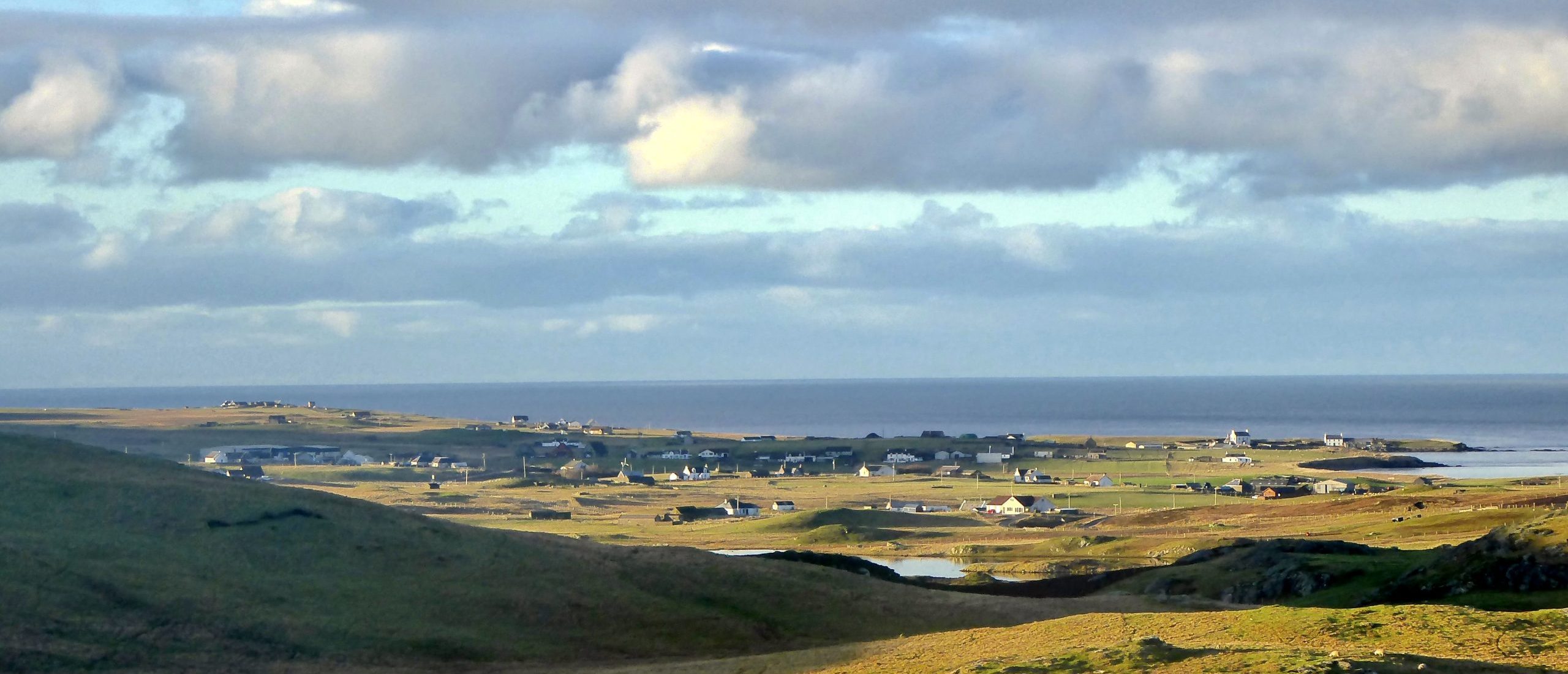
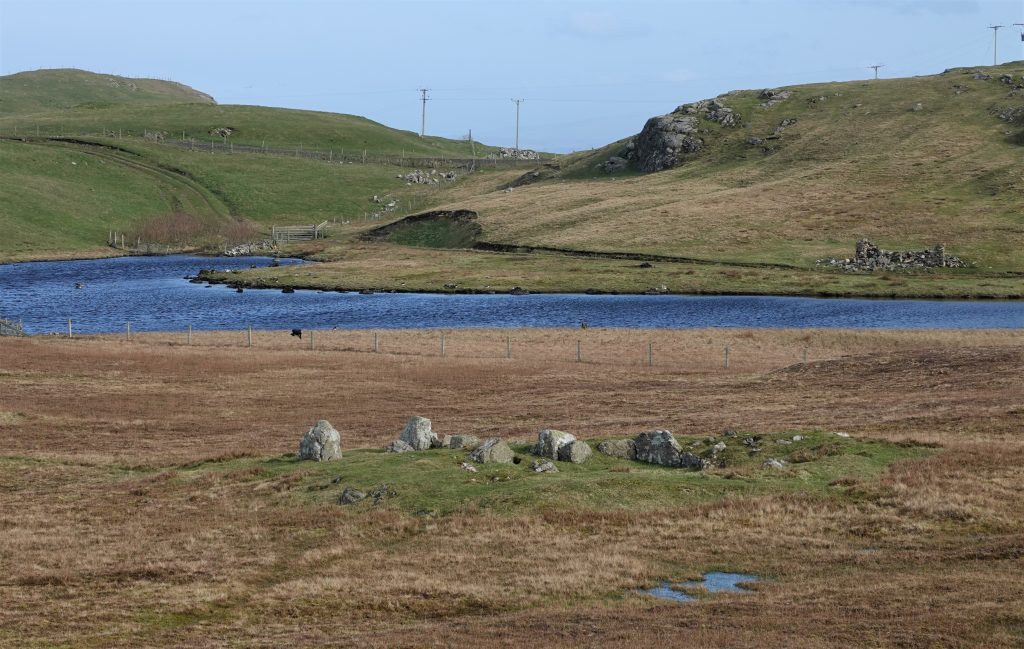
The name Sandness was given to the community by Norse invaders in the 9th century, but people have lived here for thousands of years. There is evidence of neolithic activity and remains of houses, farm systems and burials are evident in the landscape. The modern boundary, the hill dyke was constructed around 1840 and it encompasses the ‘toons’ of Norby, Melby, Huxter and Bousta, established by the Norse when they settled here.
There is evidence of continuous and rising population since the Norse settlements with Sandness becoming part of the Vaila Estate by 1490. The area provided opportunity to earn a living through crofting, knitting, fishing and seafaring. The growing community was well provided for with the first dedicated school being established by 1742.
For most of Sandness’ history there was no road, making the overland journey hard work. The sea was the highway and Sandness has had strong connections to nearby Papa Stour for many centuries. Boats travelled the coast as matter of routine, transporting people, goods and materials north to Hillswick and Voe, south to Walls, Reawick and Scalloway.
Fish and wool continued to shape Sandness into the nineteen century, as did land reform and emigration. By the early 20th century there were numerous shops, churches, a doctors surgery, a community hall and Robert Jamieson had established his wool broker business. Road improvements, telecommunications and electricity began to open up the small settlement and connect it more directly to the wider Shetland community.
Dwindling traditional livelihoods and the human cost of two world wars saw the Sandness population diminish. As a result recent decades have brought a decline in amenities similar to those felt in rural communities throughout Britain. However, despite the losses, Sandness remains an lively and active community.
For more detail read ‘The Sandness Story’ published in 2021 by The Shetland Times. Copies are available from Sandness Community Development contact us.
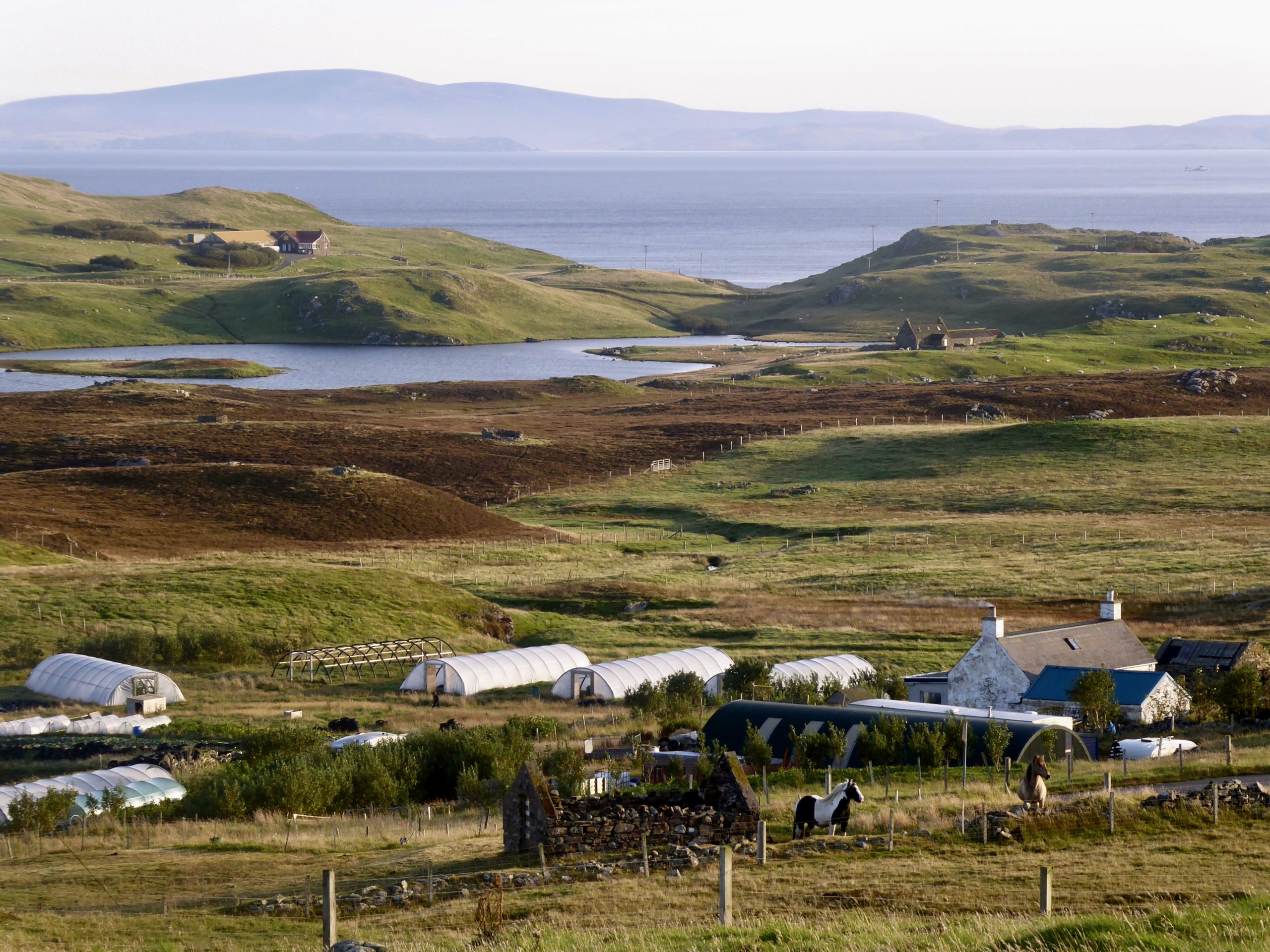
Sandness has a population of around 160. The land is still actively crofted by families who live in the community. There is a small primary school which is a lively part of the community; a community hall hosting events and a number of family run businesses providing employment. Jamiesons Spinning Mill in particular, employs many people from the local area. Residents are a mix of those who can trace their families back locally for many generations, and those who are more recent arrivals.
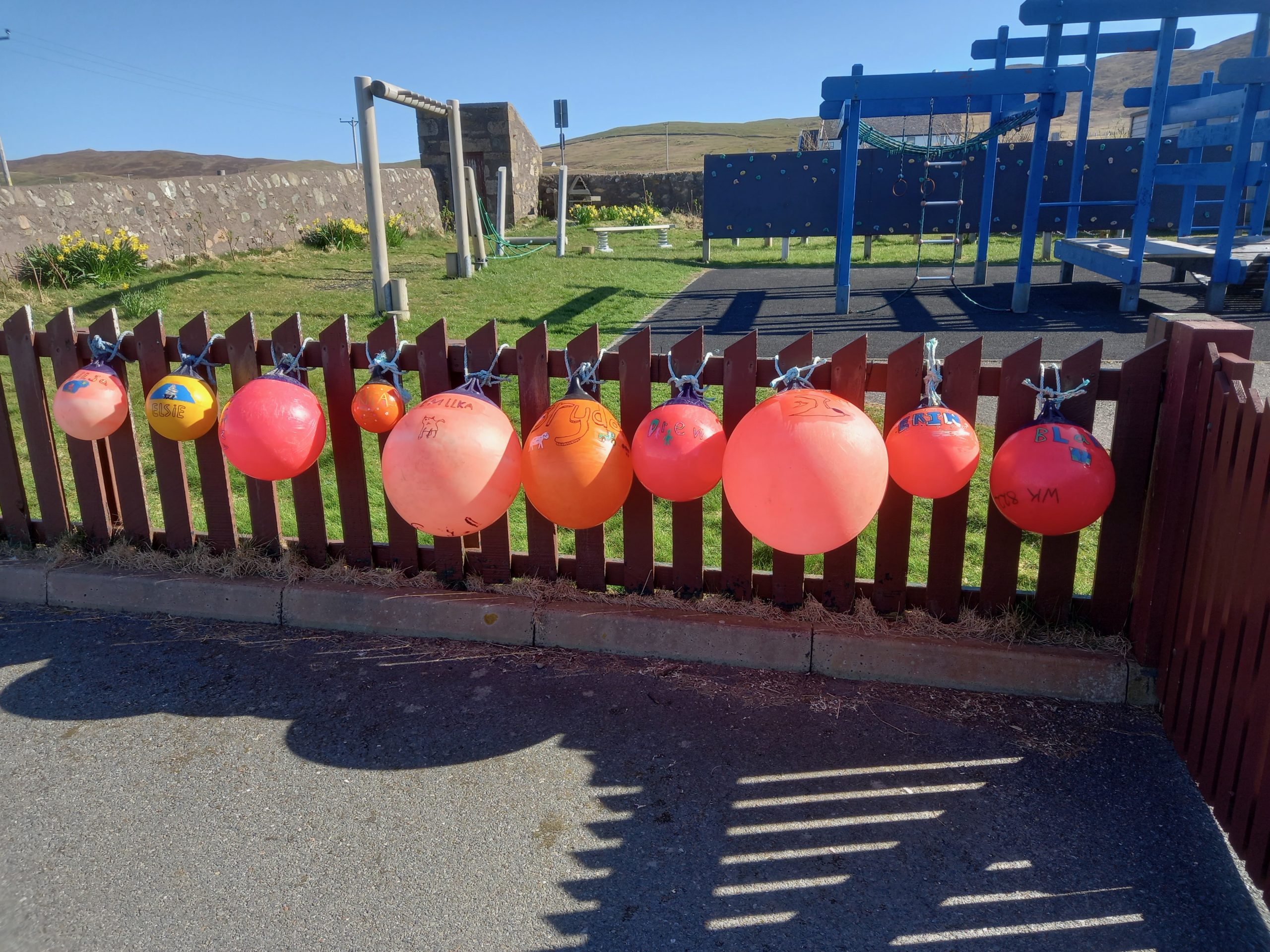
Sandness Primary School is a single teacher school with 11 pupils from Primary 1 to Primary 7 currently on the roll. The school is supported by a relief teacher, visiting teachers of music, art and PE. The head teacher jointly manages Sandness and Happyhansel Primary in Walls. The school has a strong sustainability focus and good links with the community. Pupils act as stewards of their local area going on regular litter picks and increasing biodiversity through work in the school grounds. The school actively uses the local area as a learning resource with regular trips to Norby beach, cycles and walks to discover local areas of interest like Huxter Mills or Sandness Hill. The community is regularly invited to open days, plays and assemblies put on by pupils. There is also a strong link with Happyhansel where pupils enjoy shared activities like swimming and dancing. The school is a focal point for the community and is well supported locally.
https://www.shetland.gov.uk/directory-record/1978/sandness-primary-school
This listing includes contact details and links to catchment area map, current handbook and the school blog. The latter is occasionally updated with photos of school activities and learning.
Local groups
The Parent Council represents the views of parents on the education provided by the school and other matters affecting the learning and welfare of pupils. They work in partnership with the school, the community and Shetland Islands Council Education Department.
The main aims are: to create an inclusive school for parents, pupils and the community, and to develop and engage in activities which support the education and welfare of the pupils. Meetings are held once per school term, with an Annual General Meeting held at the beginning of a new school year.
All parents of children at the Sandness Primary School are welcome to join the Sandness Parent Council. For more information, or to speak to a member of the Parent Council, contact the school, telephone: 01595 74423 or email sandness@shetland.gov.uk
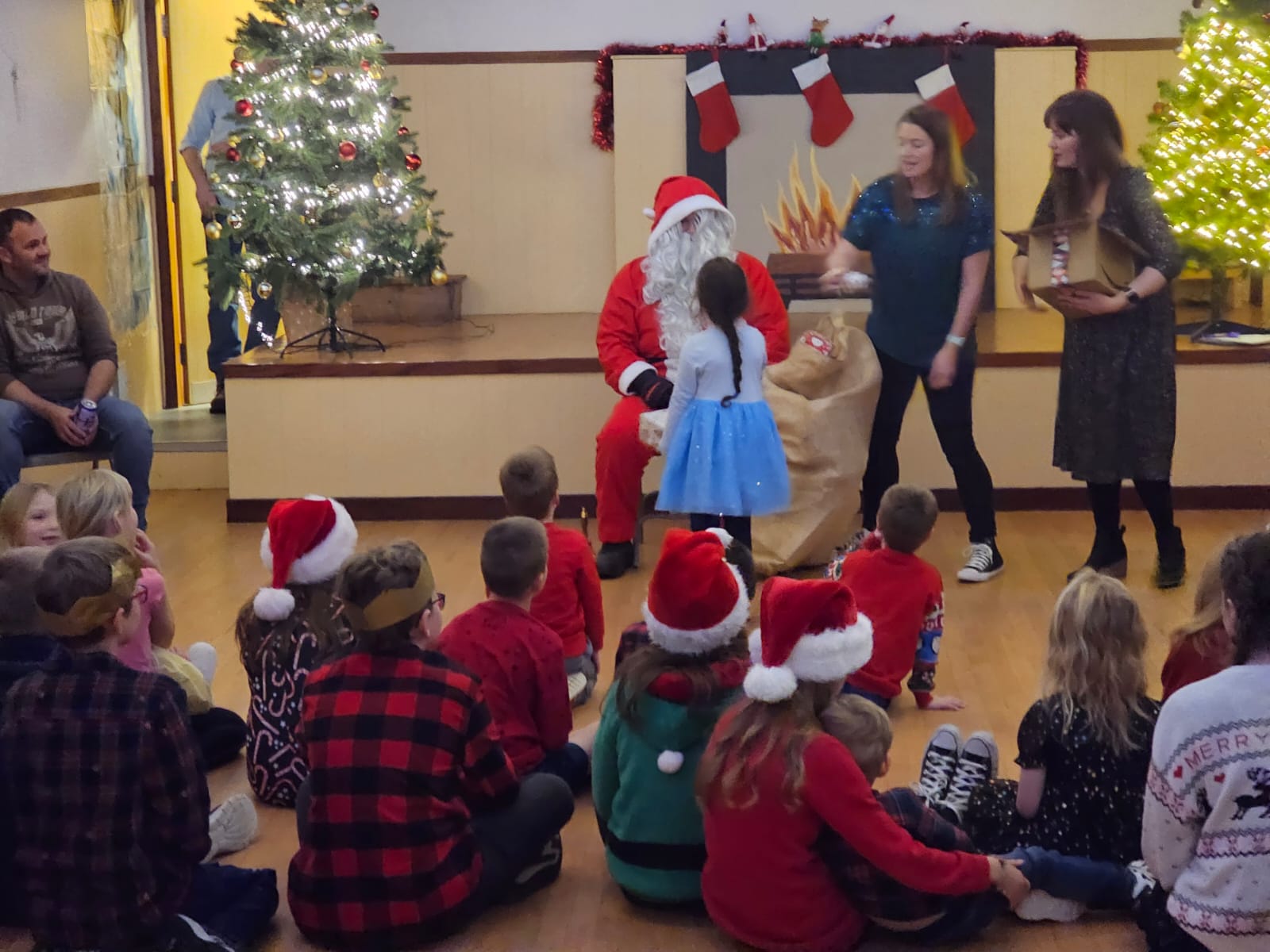
The Sandness Party Group coordinates gatherings and events for children within the community. This group is informal and parents of local children can participate in any way they wish. The main annual events include the Halloween Party and the Christmas Party, which are open to individuals of all ages. The group occasionally hosts fundraising events at other times in the year to raise funds to cover the cost of the parties. For more information email: sandness_hall@hotmail.co.uk
Was built in the early 20th century and became a Scottish Charitable Incorporated Organisation (SCIO) in 2023. The building is managed by committee from the local population. For more information, events and hire click here
Sandness has a number of local businesses including a wool spinning mill, agricultural services, equine services, a tattooist, a community growing project, holiday lets and craftspeople. For a full list of Sandness businesses and their contact details see the Community Resources page